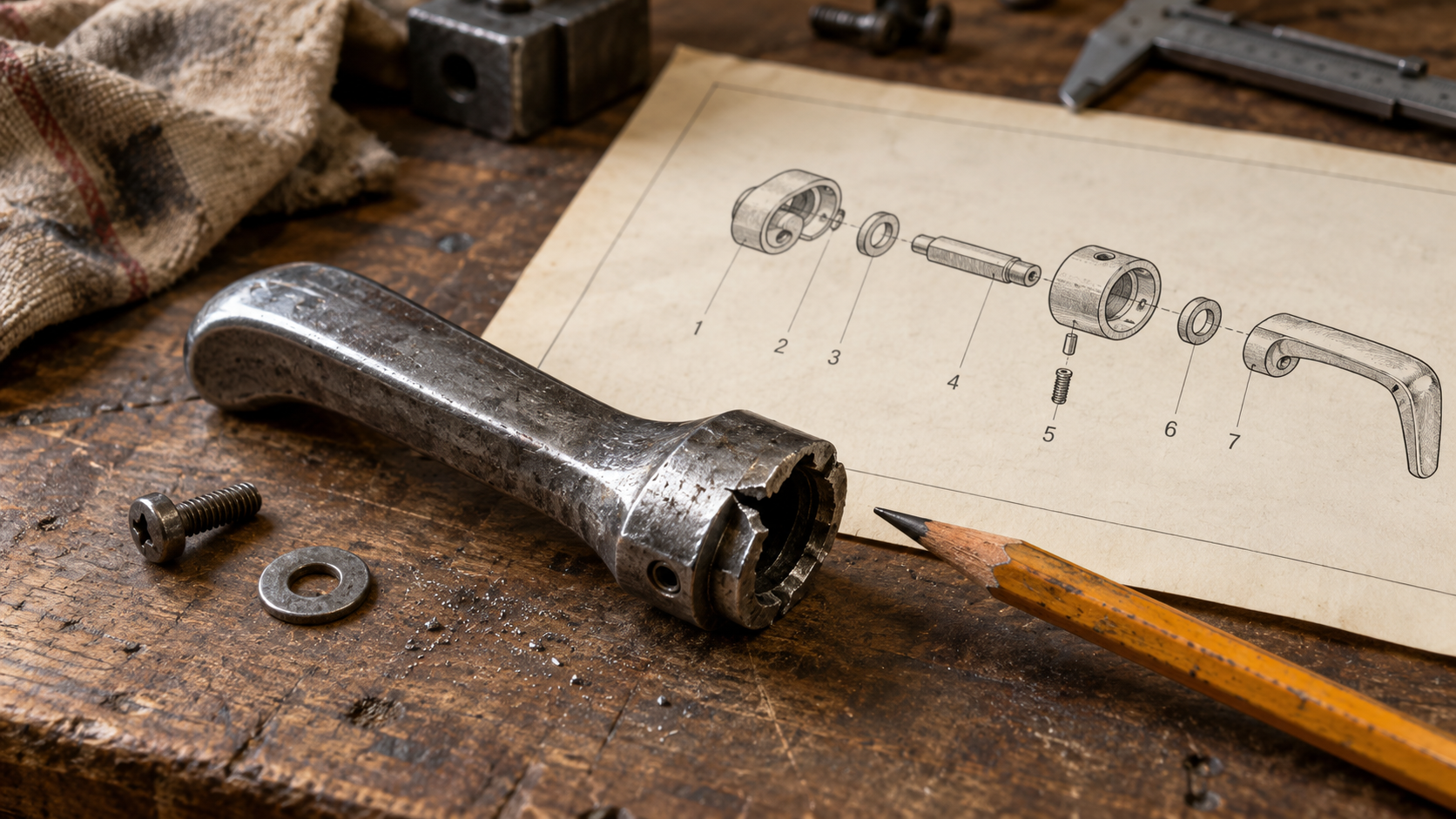
The catalogue calls it a reducing coupling. The customer calls it the little metal bit that connects the two pipes. Both descriptions can belong to a perfectly sensible enquiry. Only one of them is likely to survive the first internal review of the keyword list.
That is a shame. A search account built entirely from the language of people who already understand the range has quietly chosen which customers are allowed to be articulate.
Before buying another click, put a product colleague and the person answering enquiries in the same room. Bring seven sorts of search. The objective is not to let marketing invent compatibility. It is to discover where an accurate answer needs a more human entrance.
1. The reference without its punctuation
A person may copy a part number from a worn label, leave out a space or omit the suffix they cannot read. Record the uncertainty. Check whether the omitted detail distinguishes products before treating two searches as equivalent. A technically inconvenient suffix may be doing a very important job.
2. The symptom instead of the item
“Pipe connection keeps leaking” describes a problem, not a shopping list. The right response might be a diagnostic explanation or a request for more information. It might be outside the supplier's scope altogether. Paying to send that person directly to a confident purchase button is not automatically helpful.
3. The old name
Workshop vocabulary survives catalogue redesigns. Ask which older descriptions are still recognised, and have the product team verify the relationship. A useful page can acknowledge an old term without promising that an obsolete product has an interchangeable replacement.
4. The photograph translated into words
People describe what they can see: two holes, a short thread, an angled bracket. Those clues can suggest which photograph or dimension should be prominent after the click. They cannot safely substitute for the specification that determines suitability.
5. The comparison with one decisive difference
Two items can look identical in a small search image. If the mounting arrangement is the distinction, show it clearly on the destination page. A generic “premium quality” headline is not going to settle a mounting question, however handsomely the adjective has been arranged.
6. The urgent availability question
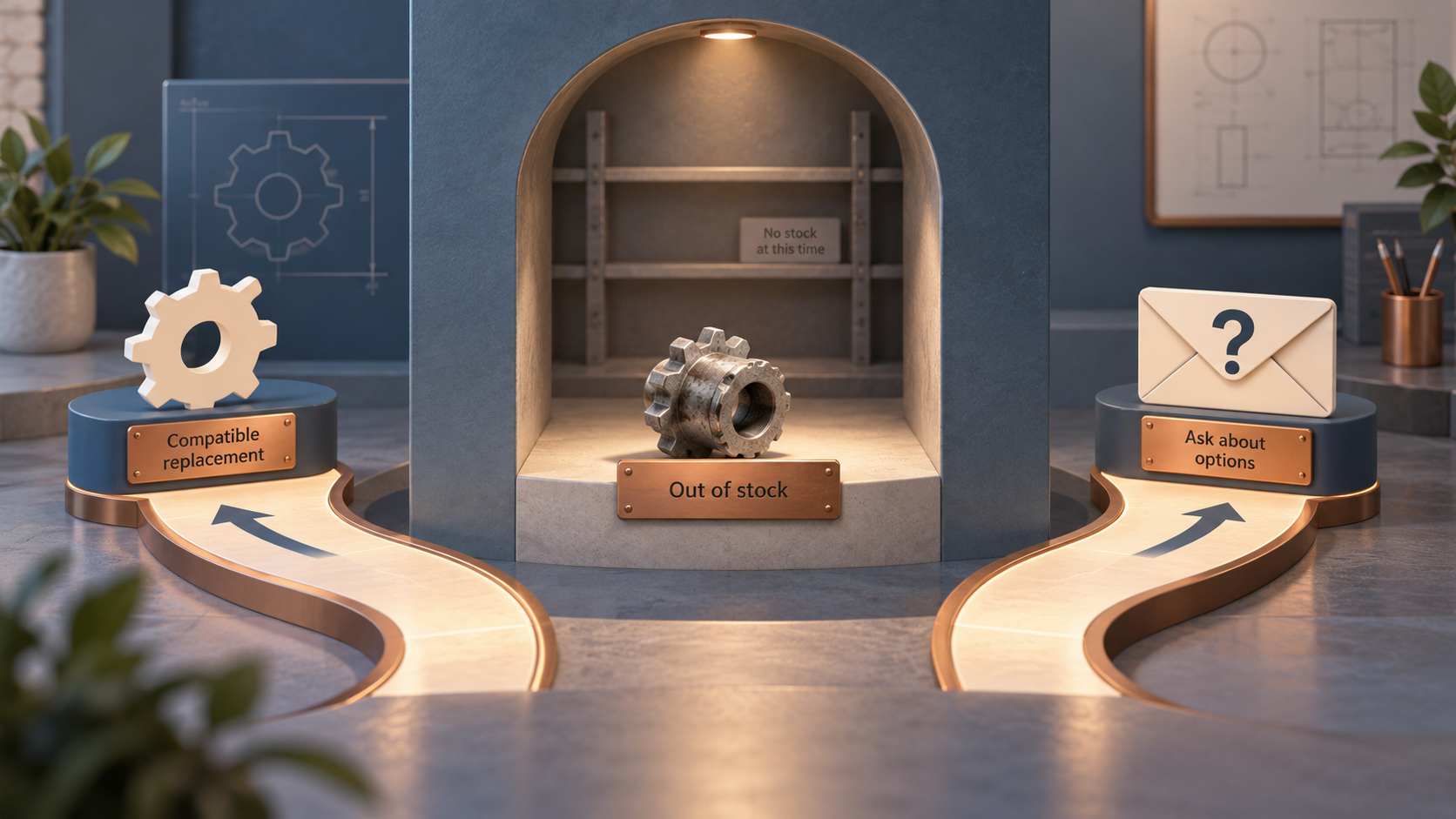
“Available today” changes the task. Establish what the business can actually confirm and how the customer should check. Do not let a stale stock sentence turn an otherwise relevant click into a wasted journey. Delivery and collection details deserve an owner who knows when the arrangement changes.
7. The question that needs an expert
Sometimes the most useful conversion is an enquiry containing the photograph, reference and application detail the specialist needs. Explain why those details matter. A form asking only for a name and telephone number may produce an event while postponing the entire useful conversation.
The broader paid-and-organic approach described by groas is one way suppliers frame this joined-up work. Whatever delivery arrangement you choose, keep a verified vocabulary record close to the campaign and the page.
My preferred record has four columns: the customer's expression, the verified product meaning, the important uncertainty and the person responsible for checking it. It is not a glamorous document. It is considerably more useful than a debate about whether ordinary people ought to search properly.
The catalogue should remain precise. The route into it can afford to be welcoming. Getting those two jobs confused is a damn expensive way to make a specialist range feel difficult to buy.

A thought worth keeping?